
How Arrest Warrants Work in Lamar County
An arrest warrant is a court order to take a named person into custody. A judicial officer reviews sworn facts for probable cause before signing. Probable cause means a reasonable basis to believe a crime occurred and that this person took part. In Lamar County, the Magistrate Court receives law-enforcement arrest and search-warrant applications and holds pre-warrant hearings, while Superior Court handles felonies in the Towaliga Judicial Circuit. Once the judge signs, the warrant goes to the agency that will serve it. The Lamar County Sheriff lists Warrants/Civil and Court Services functions, and Barnesville and Milner police handle their own city work. Lamar County publishes no public warrant database, so current status takes a direct call to the Sheriff and the issuing court.
Lamar Magistrate Warrant Applications
The Magistrate Court at 121 Roberta Drive is the clearest local place where a warrant starts. Law enforcement can present an application directly. A private citizen asking for criminal process may be routed through a pre-warrant hearing first. Georgia law expects the application to describe the offense, the time, date, place, county, and the supporting facts as nearly as practicable. After that, the paper leaves the courthouse. The agency responsible for service executes it, and the court keeps its authority over the case. Service, return, booking, or cancellation all depend on valid court documents.
Arrest Warrants: What They Contain
Georgia's official warrant and citation forms set the fields a warrant carries. Lamar County publishes no public sample. Identifiers and juvenile details may be withheld.
| Warrant or case number | Exact identifier supplied by the court; no Lamar format is published |
|---|---|
| Named subject | Name and available identifying details |
| Charge | Offense, code section, and alleged conduct |
| Issuing authority | Court, judicial officer, and issue date |
| Event facts | Date, time, place, and county as known |
| Status | Issued, served, recalled, bond, or disposition entries when applicable |
Lamar Felony Record Handoff
Felony records in Lamar County often sit in two offices. The Sheriff holds service and booking records, and the Superior/Juvenile Clerk keeps the court file at 326 Thomaston Street, reachable at 770-358-5145. The Towaliga District Attorney explains the felony prosecution and grand-jury route. A docket result alone is not a live warrant confirmation. Ask the clerk about the case first. Then ask the Sheriff whether the warrant is active, served, returned, or recalled.
How Warrants Get Served in Lamar County
County deputies serve county process in Lamar County. Barnesville Police handle Barnesville criminal or municipal papers, Milner Police handle city work, and the Sheriff's patrol division assists within Milner when asked. Another agency may execute a valid entry and coordinate a transfer. Service can happen during a home visit, a traffic stop, or another lawful contact. Once in custody, a person moves through intake, booking, a first appearance, and a bond decision if the charge is bondable. The Detention Center processes people arrested by agencies across Lamar County, though the issuing court still controls the case.
Lamar Booking and Bond Window
The Lamar County jail sits at 121 Roberta Drive, holds 152 beds, and dates to 1992. Those numbers describe the building, not any person's status. The official bond page says bond can be made day or night for bondable charges and covers cash, property, professional, and transfer bonds. No countywide bond schedule for warrants is published, so call the jail at 770-358-5151 or the Sheriff at 770-358-5159 for the actual amount, no-bond status, documents, and payment method. A judge may set conditions after arrest.
Arrest Warrants, Summonses, and Bench Warrants
Arrest warrants, summonses, and bench warrants each call for a different response. See Lamar bench warrants for the missed-court process in Lamar County.
| Feature | Arrest Warrant | Summons | Bench Warrant |
|---|---|---|---|
| What it orders | Custody | Appearance without immediate arrest | Custody after a missed obligation |
| Basis | Probable cause | A charge or proceeding | Failure to appear or comply |
| Response | Confirm, seek counsel, surrender or answer service | Appear as directed | Contact the case court about recall or reset |
No Lamar Public Search Interface
The Sheriff's public-interest menu offers no arrest-warrant search or most-wanted roster. Georgia's GCIC network holds wanted-person data for criminal-justice agencies, not public self-service users. Call the Sheriff at 770-358-5159. Records requests go to 770-358-5377 or general@lamarcountysheriff.com by email, fax, mail, or in person. Then contact the issuing court. A no-record reply from one office is not clearance for all of Lamar County.
Handling an Arrest Warrant in Your Name
Georgia's official warrant guidance sends the public to the county sheriff and warns that an in-person check can end in immediate custody. Gather your name, date of birth, case number, and likely court before you call. Confirm the charge, the serving agency, bond status, and the court in Lamar County before appearing.
- Call the Sheriff and the issuing clerk.
- Ask a lawyer about recall, surrender, first appearance, and bond.
- Confirm the surrender place, time, identification, medication handling, transport, and bond contact.
- Keep bond receipts and later court orders.
Important: Do not flee, resist, confront officers, or treat a missing online name as proof that an arrest warrant is gone.
Lamar Arrest Warrant Records Requests
The Sheriff's records form asks for your contact details, the record type, case number, date, involved names, location, and other facts. When you request warrant records, describe the matter in the "Other" field and keep it to your own case or a relative's with consent. Under Georgia Open Records Act guidance, an agency should produce available public records within three business days or state the timetable, cost, and legal basis for delay. Sealed, juvenile, and active-investigation material can limit release. Redaction does not mean a Lamar County warrant is inactive.
Lamar Arrest Bond Records
An arrest warrant and the records created after service are two different things, and the Sheriff's material helps keep them apart. The jail operations page shows how Lamar County handles intake and release.
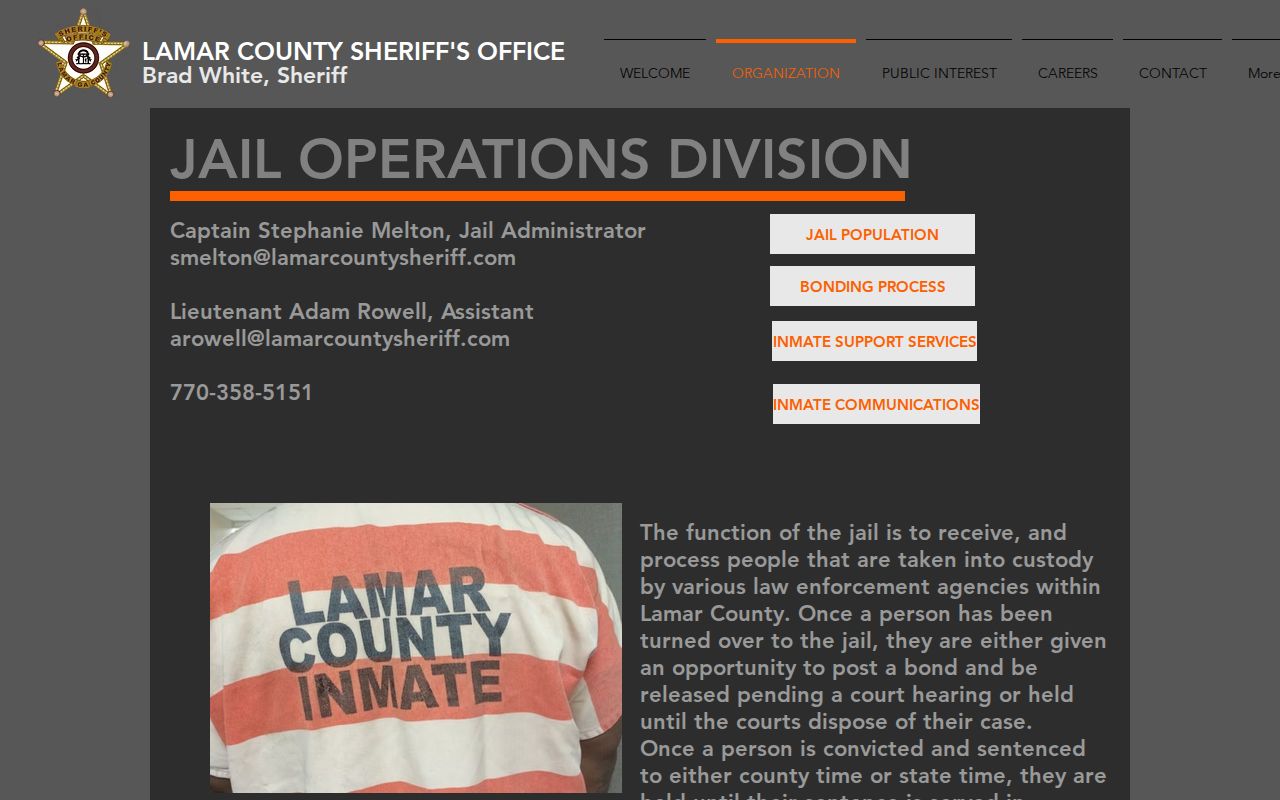
A booking record and a court docket answer different questions in Lamar County. Booking shows a person is in custody. The docket shows the charge and what the judge has done. A jail-population entry is not a warrant list, since it covers people already booked rather than every unserved warrant in Lamar County.
Bond works several ways after an arrest. Cash bond means deposited money. A property bond requires qualifying local property plus proof of ownership, taxes, identity, and equity. A professional bond goes through an approved bonding company and usually carries a nonrefundable charge. A transfer bond handles property outside Lamar under the stated process. Remember that the court can still add conditions or withhold ordinary bond on a specific charge.
Ask before any money moves. Which court set the bond? Does the amount cover every hold? What fee applies, and where will the next court date be sent? Keep the bond receipt. A missed date can mean forfeiture plus another warrant, so confirm the calendar with the clerk instead of trusting release paperwork alone.
Confirm Lamar Arrest Warrant Status
When you call about a Lamar County warrant, press for four clear answers. Which court issued it? Which agency holds it? Is it still active? What event will close or update the record? If the Sheriff gives the answer, check it against the case clerk's docket. If a clerk answers, ask whether the order went out to the serving agency.
Write down the office you spoke with, the date, and the case number. An informal phone conversation is not a signed release. After surrender or service, get the next court date and written bond conditions. After a recall, dismissal, or other court action, request the filed order and confirm the Sheriff or city police received it. Status often lags between court and law-enforcement systems in Lamar County. The current court order is the key document; agency confirmation tells you whether the operational entry has caught up.